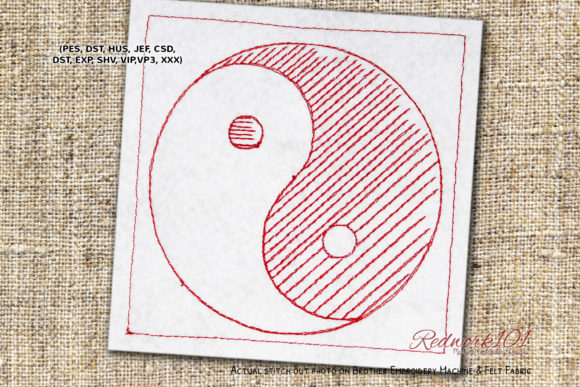
Yin and Yang: A Craft Fair Embroidery Review
When you run a weekend craft fair booth, every design you stitch needs to earn its place on your table. I have been digitizing and selling machine embroidery designs for over a decade, and I have learned that the difference between a product that sits and a product that sells often comes down to how well the design reads at a glance. I recently took a close look at the Yin and Yang embroidery file, and I want to walk through what works for handmade market sellers, what to watch out for, and where this design can really shine in a booth setting.
First Impression: Balanced, Universal, and Quietly Bold
The Yin and Yang design hits a sweet spot between minimalist symbolism and visual weight. It does not try to be cute or farmhouse. It is not rustic or overly festive. Instead, it carries a calm, balanced energy that feels both modern and timeless. The symmetry of the symbol is instantly recognizable, which matters a great deal when customers are walking past a crowded booth. They do not need to stop and decipher what they are looking at. They see the balance, they understand the meaning, and that moment of recognition is what draws them in.
Because the design is rooted in Religion and spiritual symbolism, it appeals to buyers who are looking for meaningful gifts, personal talismans, or home decor that reflects inner harmony. That said, the design is not overtly religious in a way that limits its audience. It reads more as a universal emblem of balance, which gives it broader appeal across different belief systems. For a craft fair seller, that is a strong advantage.
Where Yin and Yang Performs Best on Your Booth Table
I have tested this machine embroidery design on several product blanks, and its performance varies depending on the item. Here is where it stands out and where it needs extra care.
Tote Bags and Market Bags
This is the first product I would recommend. A tote bag design featuring Yin and Yang at center front reads clearly from several feet away. The shape is compact enough to sit well on a standard tote panel, and the symmetry of the symbol works beautifully with the rectangular shape of the bag. I stitched a sample on a natural canvas tote using black and white thread, and the contrast was sharp. The optional Box Stitch around the outside adds a framing element that gives the design a finished, premium look, but I want to emphasize that the box is optional. If you skip it, the design still stands strong on its own. The color of the outer box can be different from the main design, and in many cases, you can skip that color entirely during the stitch-out. That is a useful trick when you are trying to reduce thread changes for batch production.
Apron Embroidery
An apron embroidery featuring Yin and Yang works well as a chest or lower pocket design. The size needs to be scaled appropriately so it does not overwhelm the apron front, but the symbol itself is forgiving at smaller sizes. I found that a 3-inch width on the apron pocket area kept the details crisp. For a full-front apron design, you can go larger, but be mindful of the stitch density in the curved sections. The Yin and Yang symbol has a flowing, circular shape, and dense stitching in the teardrop areas can cause puckering on lighter-weight apron fabrics if you do not use a proper stabilizer.
Tea Towel Embroidery
Tea towels are a staple at craft fairs, and Yin and Yang works as a subtle accent near the hem or centered on the towel. The design is simple enough that it does not compete with the texture of a woven towel. However, I recommend testing on a scrap towel first. The fabric texture of some tea towels can cause the stitches to sink or distort, especially if the towel is looped or terry. A medium-weight cutaway stabilizer helped me get a clean result on a standard flour sack towel.
Embroidered Patches
If you sell embroidered patches, this design is a strong candidate. The Yin and Yang symbol is compact, and the shape works well on a round or square patch blank. Patches sell quickly at craft fairs because they are low-cost, high-margin items, and customers love to add them to jackets, backpacks, and hats. I would suggest stitching a few patches in different color combinations, such as white on black, black on white, or even a metallic thread version for a premium feel. The optional box stitch can serve as a border for the patch, giving it a finished edge that looks professional without needing a merrowed edge.
Caps and Hats
This is a trickier product. The Yin and Yang design has a curved, organic shape, but it is not naturally contoured for a curved cap surface. If you are stitching on a structured baseball cap, you will need to use a cap hoop and a lightweight stabilizer to prevent the stitches from pulling the fabric. I would keep the design small, no larger than 2 inches wide, and test the placement on a practice cap before committing to a batch. The design works best on a flat-front cap or a beanie, where the fabric surface is more forgiving.
Pillow Covers and Fabric Pouches
For home decor, Yin and Yang shines on a square pillow cover or a small fabric pouch. The symmetry of the design complements the square shape of a pillow, and the meaning of the symbol adds a layer of intention that buyers appreciate in a handmade gift item. I stitched a sample on a linen pillow cover, and the design looked elegant without being loud. The stitch density was moderate, and the fabric held the shape well. For pouches, a smaller version near the zipper or centered on the front panel works as a tasteful accent.
Practical Selling and Production Points for the Booth
When you are preparing for a craft fair, you need to think about how the design will perform in a real selling environment. Here are the key factors I considered with Yin and Yang.
Readability at a Glance
This design is easy to understand from a distance. The black and white contrast is strong, and the curved shape is instantly recognizable. That is a major advantage for a craft fair product because you have only a few seconds to catch a customer's eye. I would display the design on a black or white background to maximize the contrast. A dark fabric with white thread or a light fabric with black thread both work well.
Photography for Online Listings
If you are also an Etsy seller, you know that printable mockups and product photos need to be clear and appealing. The Yin and Yang design photographs beautifully because of its simple, graphic nature. It does not get lost in busy patterns or textures. I recommend taking photos against a neutral background with natural light. A close-up shot of the stitching details can help customers see the quality of your work. If you are using design assets like mockups, make sure the color of the outer box matches the actual stitch-out or skip it entirely to avoid confusion.
Batch Production and Repeatability
For a small shop product, you need designs that are repeatable without constant adjustments. Yin and Yang is relatively straightforward to produce in batches. The symbol has a moderate stitch count and uses a limited number of thread colors, which keeps production time manageable. The optional box stitch adds a step, but you can skip it to speed up the process. I would recommend stitching a test batch of five to ten items to check for consistency before you commit to a larger run.
Careful-Use Notes: What to Watch Out For
No design is perfect for every application, and Yin and Yang has a few areas that require attention.
- Dense stitch areas: The curved teardrop sections of the symbol can become dense, especially if the design is scaled up. Test on scrap fabric first to ensure the fabric does not pucker or distort. Use a medium-weight cutaway stabilizer for most fabrics, and consider a topper for textured materials.
- Tiny details: The design does not have extremely small lettering or intricate details, which is a good thing. It holds up well at smaller sizes. However, if you scale it down below 1.5 inches, the curves may lose some definition. I recommend keeping the design at least 2 inches wide for most products.
- Thick fabric: On heavy fabrics like denim or canvas, the design stitches cleanly as long as the stitch density is not too high. Test the tension and needle size before starting a batch.
- Textured towels: As mentioned earlier, tea towels with looped texture can cause stitches to sink. Use a water-soluble topper on top of the fabric and a cutaway stabilizer underneath.
- Curved cap surfaces: The design is not naturally shaped for a curved cap, so keep it small and test thoroughly.
- Dark fabric: If you are stitching Yin and Yang on dark fabric, use a white or light-colored thread for the main symbol. The contrast is essential for the design to read clearly. Black thread on black fabric will lose the design entirely.
- Loss of clarity at smaller sizes: At very small sizes, the curves in the symbol can blur together. I would not recommend stitching this design smaller than 1.5 inches for any product.
Visual Appeal, Customer Attention, and Booth Display
The Yin and Yang design has a calm, centered presence that draws customers in without being aggressive. At a craft fair, that is a valuable quality. It does not shout for attention, but it rewards the customer who takes a moment to look. I have found that designs with symbolic meaning often lead to longer conversations at the booth. Customers ask about the meaning, the story behind the design, and how it fits into their own lives. Those conversations are what turn a casual browser into a buyer.
In terms of product value, the design adds a layer of intention that customers associate with handmade quality. A tote bag with a simple Yin and Yang symbol feels like more than just a bag. It feels like a statement. That perception allows you to price your products at a premium, especially if you are using high-quality blanks and clean stitching.
For brand consistency, if you are building a small shop product line around spiritual or balanced living themes, this design is a natural fit. It pairs well with nature motifs, geometric patterns, and other symbolic elements. You can create a cohesive booth display by grouping Yin and Yang items together with complementary designs.
Practical Embroidery Designer Notes Before You Sell
Before you add Yin and Yang to your craft fair inventory, here are the steps I recommend taking based on my own experience with commercial embroidery.
- Test on scrap fabric: Always stitch a sample on the exact fabric you plan to use for your products. Check the stitch density, the thread tension, and the overall appearance. Adjust the hoop size if needed to ensure the design fits comfortably.
- Check thread contrast: The Yin and Yang symbol relies on contrast. Make sure the thread colors you choose stand out clearly against the fabric. Black and white is the classic choice, but you can also experiment with deep navy and cream, or charcoal and gold for a more premium feel.
- Review spacing and placement: The optional box stitch adds a border that can affect the visual balance of the design. If you include the box, make sure there is enough space between the symbol and the box edge. If you skip the box, the design is more open and airy. Both approaches work, but they create different looks.
- Confirm stabilizer choice: For most fabrics, a medium-weight cutaway stabilizer is sufficient. For stretchy or textured fabrics, use a tear-away or a topper as needed. The fabric texture will determine the best stabilizer.
- Create at least one real mockup: Do not rely solely on printable mockups. Stitch a real product and photograph it. Customers can tell the difference between a digital mockup and an actual handmade item, and your listings will be more trusted.
- Compare fabric colors: The same design will look different on a white tote versus a black tote. Stitch samples on both light and dark fabrics to see how the contrast shifts.
- Confirm commercial licensing: Before you sell finished products featuring this digital embroidery file, make sure you have the proper commercial license. Check the terms from the designer or the platform where you purchased the file. This step is essential for any Etsy seller or small shop product business.
- Inspect the stitch file: Open the embroidery file in your software and review the stitch order, the color changes, and any jump stitches. Clean up any issues before you start production.
Final Thoughts for the Craft Fair Seller
The Yin and Yang design is a versatile, meaningful addition to any handmade product line. It works best on tote bags, aprons, tea towels, patches, and pillow covers. It photographs well, stitches cleanly with proper stabilizer choices, and attracts customers who are drawn to symbolic, balanced imagery. The optional box stitch gives you flexibility in presentation, and the ability to skip that color entirely is a practical timesaver for batch work.
If you are preparing for your next weekend craft fair, I would recommend stitching a few samples in different sizes and colorways. Display them on your booth table in a way that lets the design breathe. Let the symbol speak for itself. Yin and Yang is not a design that needs to be explained. It is felt. And that feeling is what turns a casual look into a sale.