Notation Symbol: A Designer's Review for Craft Fair Success
As an embroidery designer who has prepped countless booths for weekend craft fairs, I know the difference between a design that sits in a sample bin and one that walks out the door within the first hour. When I first opened the Notation Symbol machine embroidery design, I immediately saw potential for a strong, versatile product line. This is not a cutesy, farmhouse-style motif or a dense, decorative flourish. It reads as modern, minimal, and musical with an elegant simplicity that appeals to musicians, teachers, students, and anyone who loves clean visual language. Let me walk you through how I judge this design for real-world selling, from booth display to batch production.
First Impression: Clean, Confident, and Conversation-Starting
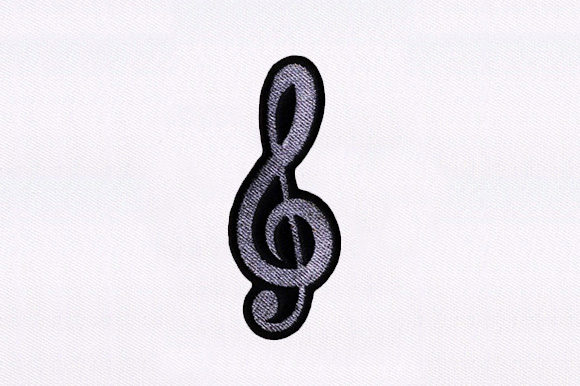
My first reaction to Notation Symbol was that it feels intentional. It is not a busy, cluttered design. It does not rely on excessive ornamentation to communicate its theme. The silhouette is immediately recognizable as music-related, yet it is stylized enough to feel like a piece of modern art rather than a generic clip-art note. That distinction matters at a craft fair. Customers who buy handmade products are looking for something that feels curated, not mass-produced. This design delivers that impression.
The mood is sophisticated but approachable. It could work on a gift for a piano teacher, a tote for a choir director, or a decorative pillow for a music studio. It does not scream "novelty item." Instead, it whispers "I belong in your everyday life." That is exactly the kind of versatile energy that sells across multiple product categories.
Product Performance: Where Notation Symbol Shines
I tested this design mentally across the full range of products I typically bring to a craft fair table: tote bags, aprons, tea towels, caps, patches, small pouches, pillow covers, and market bags. Here is where I see the strongest performance.
Tote Bags and Market Bags
This is where Notation Symbol really earns its place. The design dimensions are 1.58 inches wide by 3.83 inches tall, which fits beautifully as a centered motif on a standard tote bag. It is tall enough to command attention but narrow enough to leave breathing room. I would place it about 4 inches below the top hem for a balanced look. On a natural canvas tote, the contrast of a single dark thread color against the light fabric is striking. Customers will notice it from across the booth. It photographs exceptionally well for Etsy listings because the clean lines read clearly in thumbnail images.
Apron Embroidery
Aprons are a staple at craft fairs, and this design is an ideal candidate for a centered chest placement. The height works well on a bib apron, and the minimal width means it does not compete with the wearer's face. I would recommend matching thread colors to the apron fabric for a tonal look, or using a contrasting metallic or bright thread for a pop. For a handmade product aimed at music teachers or baristas, this is a quick win.
Tea Towel Embroidery
Tea towels are a fantastic entry-level product for craft fair sellers because they are low-cost to produce and easy to bundle. The Notation Symbol design fits neatly on a standard tea towel half-fold. I would place it about 2 inches from the bottom hem. The stitch count of 7141 stitches is moderate, meaning it will not overwhelm a lightweight towel fabric, but it is substantial enough to look premium. The design works as a single motif or as a repeated pattern if you have the space.
Embroidered Patch
Patches are a high-margin product category, and this design is perfect for patch production. The narrow shape and clean outline make it easy to trim and edge. I would produce patches in a few colorways: black on white, white on black, and a metallic gold on navy. Patches sell quickly at craft fairs because they are impulse buys. Notation Symbol as a patch could be sewn onto jackets, backpacks, or instrument cases, which gives it a long life after the sale.
Caps and Small Pouches
On a curved cap surface, the height of 3.83 inches is within the typical embroidery zone. The design is narrow enough to fit on a cap front without distorting. I would test it on a structured cap first to confirm the lettering and spacing hold up. On small fabric pouches or zipper cases, the design works as a centered statement. It adds perceived value without requiring a large embroidery area.
Selling and Production Points: What Makes This Design Work for Business
From a business perspective, Notation Symbol checks several important boxes for commercial embroidery and small shop product development.
- Easy to understand at a glance: Customers immediately recognize the music theme. There is no confusion. That means less explaining and faster purchasing decisions.
- Works as a small accent or large focal design: The proportions are versatile. It can be scaled within the 4x4 hoop size or used as part of a larger composition. The hoop size is 4x4, which is accessible for most home embroidery machines.
- Photographs well for online listings: Clean, minimal designs perform better in printable mockups and real product photos. The design does not get muddy or lose detail when reduced to a listing thumbnail.
- Repeatable for batch production: With 7141 stitches, the embroidery time is reasonable. You can produce multiple units in a single session without machine fatigue. This design is efficient for batch production.
Careful-Use Notes: What to Watch For
No design is perfect for every application. Here are the considerations I noted when reviewing Notation Symbol for production.
Dense Stitch Areas
The stitch count of 7141 is moderate, but depending on the specific pathing of the design, there could be dense areas, especially in the symbol's thicker sections. I recommend running a test stitch on scrap fabric before committing to a batch. Check for any areas where the thread might pucker or the fabric might pull. Use a stabilizer appropriate for the fabric weight. For lightweight fabrics like tea towels, a tear-away stabilizer should suffice. For thicker fabrics like canvas tote bags, a cut-away stabilizer is safer.
Tiny Details and Small Lettering
The design does not appear to contain tiny lettering, but the definition of the symbol's lines and curves needs to be crisp. If the design has any thin strokes, they may lose clarity at smaller sizes. Since the W 1.58 in width is already narrow, scaling down further could cause detail loss. I recommend staying within the provided dimensions or scaling up slightly, but not scaling down below 1.5 inches in width.
Thick Fabric and Textured Towels
On thick fabrics like denim aprons or textured towels, the design may need a higher needle and a stabilizer with more hold. Test the design on the actual fabric you plan to use. For tea towel embroidery, the fabric is often loosely woven, so a water-soluble stabilizer on top can help keep the stitches crisp.
Curved Cap Surfaces
As mentioned, the height of 3.83 inches is within the cap embroidery zone, but the design's shape may distort on a curved surface. I recommend testing on a practice cap before production. Adjust the hooping angle if needed to ensure the symbol sits straight.
Dark Fabric
On dark fabric, the design will require a thread color that provides strong contrast. White, silver, metallic gold, or a bright accent color will work. If the design has fine details, they may be harder to see on dark backgrounds. Consider using a backing layer of white thread or a heavier weight thread for better visibility.
Visual Appeal and Customer Attention
At a craft fair, your booth display needs to stop people in their tracks. Notation Symbol has a clean, modern aesthetic that reads well from a distance. I would display it on a tote bag design hanging at eye level, with a few coordinating products nearby. The design's simplicity allows it to act as a brand anchor for a music-themed product line. Customers who are musicians, teachers, or music lovers will feel a personal connection to the design. It also works well as a gift item for someone who "has everything" but appreciates subtle, meaningful decoration.
The design's handmade quality comes through in the stitching. Because it is not overly complex, the finished embroidery looks polished and professional. That builds trust with buyers and increases the perceived value of your products. A well-executed Notation Symbol on a quality tote bag can easily justify a higher price point.
Practical Embroidery Designer Notes
Before you start producing finished products for your craft fair booth or Etsy seller shop, here are my recommended steps.
- Test on scrap fabric. Always run a test stitch on fabric similar to your final product. Check for puckering, thread breaks, and alignment.
- Check thread contrast. The design's impact depends on clear contrast between the thread and the fabric. Test a few color combinations to see what pops.
- Review spacing. Confirm that the design's placement on your product allows for balanced margins. The height 3.83 in means it needs vertical space. Do not crowd it near seams or edges.
- Confirm hoop size. The design is built for a 4x4 hoop. Ensure your machine supports this size and that you have the correct hoop for your machine model.
- Inspect stitch density. With 7141 stitches in a compact area, the density may be high. If the fabric is delicate, consider using a lighter stabilizer or reducing stitch density if your software allows.
- Use the right stabilizer. For most applications, a medium-weight cut-away stabilizer will give the best results. For stretchy or textured fabrics, use a stabilizer with additional hold.
- Create at least one real mockup. Before you list products online or bring them to a craft fair, stitch out a real sample. Photograph it on the product for your Etsy listings and printable mockups.
- Compare fabric colors. The design works best on solid, neutral fabrics where the symbol can stand out. Avoid busy patterns that compete with the motif.
- Confirm commercial licensing. Before selling finished products, verify that the digital embroidery file includes commercial use rights. Many designers offer this, but you must check the license terms. The embroidery file formats provided (10O, ART, CND, DSB, DST, DSZ, EXP, HUS, JEF, PCS, PEC, PES, TAP, VIP, V) cover most major machines, which is excellent for digital sellers and commercial embroidery businesses.
Final Thoughts for Craft Fair Sellers
Notation Symbol is a machine embroidery design that I would confidently add to my product lineup for a weekend craft fair. It is musical without being childish, modern without being cold, and simple without being boring. It translates well across multiple product categories, from tote bags to embroidered patches, and it photographs beautifully for online sales. The stitch count is manageable, the hoop size is standard, and the file formats are widely compatible.
If you are a handmade product creator looking to expand your music-themed offerings, this design is a strong candidate. It will appeal to a broad demographic, from young students to retired music teachers. It adds a touch of elegance to everyday items and gives your booth a cohesive, professional look. With proper testing and attention to fabric texture, thread colors, and stabilizer choice, Notation Symbol can become a reliable seller in your craft fair product rotation.
Happy stitching, and see you at the next market.