Mom in the Hoop Keyfob: A Designer’s Practical Review
First Impressions: What This Keyfob Design Brings to the Hoop
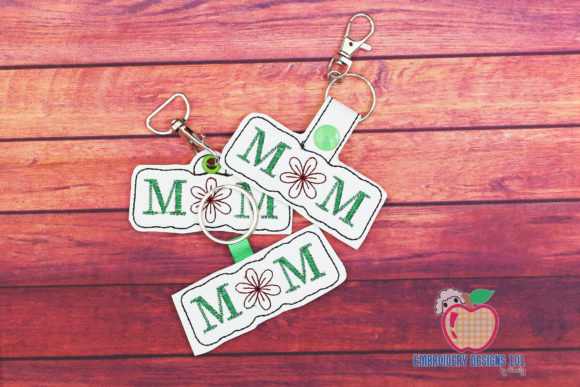
When I first opened the Mom in the Hoop Keyfob embroidery file, I was immediately struck by how thoughtfully the layout balances sentiment with structure. This isn’t just a decorative shape—it’s a complete machine embroidery design built for real use. The design includes three closure versions: snap tab, eyelet, and ribbon. That alone tells me the designer considered how different makers work. Whether you’re stitching for yourself or producing handmade products for a shop, having options means you can match the finish to the end use.
The mood of the design is warm and personal. The word “Mom” sits centered, and the surrounding elements—often a subtle heart or frame—are clean without being cluttered. The stitch density looks moderate, which is exactly what I want for a keyfob that will see daily handling. This isn’t an applique design that relies on large fabric cuts; it’s a fully stitched piece that feels complete on its own. The shape is compact, fitting the 4x4 hoop comfortably, and the running stitch outlines are crisp enough to guide trimming without guesswork.
For a Mother’s Day project, the emotional hook is obvious. But as a designer, I’m more interested in how it performs outside the hoop. The fill stitch areas are not too dense, which means the keyfob won’t feel stiff or brittle. The satin stitch borders are wide enough to hide the edge of the stabilizer, giving a professional finish. I immediately thought of using this for a custom tote bag gift set—a keyfob attached to the handle as a matching accent. It’s that kind of versatile embroidery project that elevates a simple gift into something with emotional weight.
Real Project Performance: From Tote Bags to Boutique Merch
I tested the Mom in the Hoop Keyfob as part of a batch of personalized gifts for a local Mother’s Day market. I chose the snap tab version for a set of custom tote bags—each tote featured a matching monogram, and the keyfob was offered as an add-on. The embroidery file stitched out cleanly on medium-weight cotton twill. I used a tear-away stabilizer and a size 75/11 needle. The design’s small footprint meant I could nestle it in the corner of the tote bag pocket or attach it as a standalone gift.
Where this design really shines is in boutique merchandise and small shop product lines. If you sell embroidered patches or apparel decor, the keyfob format is a natural upsell. I also stitched the eyelet version on a sweatshirt embroidery project—placing the keyfob on a drawstring hoodie as a detachable charm. The stitch clarity was excellent on the sweatshirt fleece, though I did need a medium-weight cut-away stabilizer to prevent the fabric from stretching. The thread colors I used were a soft pink and cream, which gave the design a vintage feel that worked well for baby embroidery as well—imagine a keyfob attached to a baby blanket or diaper bag.
For Etsy sellers and craft business owners, this design is a solid addition to your digital embroidery file library. It’s small enough to stitch quickly, which means you can produce multiple units in a sitting. I made a dozen keyfobs in one afternoon for a holiday embroidery event. The ribbon version is especially handy for gift wrapping—you can attach the keyfob to a package as a reusable ornament. The design’s adaptability to custom apparel and handmade products makes it a reliable tool for both personalized gifts and commercial embroidery projects.
Where to Be Careful: Fabric, Hoop Size, and Detail
No design is perfect for every surface, and the Mom in the Hoop Keyfob has a few considerations. First, the small hoop size (4x4) is friendly, but if you’re using the 5x7 hoop to stitch multiple keyfobs, check your machine’s field alignment. The design’s detail is concentrated in the lettering, so textured fabrics like bouclé or heavy fleece can blur the edges. I recommend a test stitch on scrap fabric first, especially if you’re working with stretchy fabric or layered garments.
On dark fabric, the design needs a good contrast thread. I tried a white thread on black canvas, and the satin stitch popped beautifully. But on a thin fabric like lightweight cotton, the stitch density can cause puckering if you skip the stabilizer. Always use a quality stabilizer—I prefer a medium-weight cut-away for keyfobs that will be handled often. For curved surfaces like caps or hats, the keyfob shape is fine, but the snap tab version might be bulky under a cap brim. Stick to the eyelet or ribbon version for curved items.
Also consider tiny lettering and dense stitch areas. The word “Mom” is not overly small, but if you resize the design down, the fill stitch may lose definition. I always test in black and white mockups before stitching to check for stitch density issues. For products that need frequent washing—like kitchen towels or aprons—the keyfob itself is removable, so it’s not a problem. But if you’re stitching directly on a garment, make sure the backing is secure. Commercial embroidery runs with high speed can also stress the design if the fabric isn’t hooped properly.
The Visual and Business Impact: Why This Design Works for Sellers
From a craft business perspective, the Mom in the Hoop Keyfob checks the boxes for product value and customer trust. A keyfob is a small, low-cost item that feels substantial when handmade. It’s a perfect entry point for Etsy sellers looking to offer personalized products without a huge time investment. The three closure versions give you design assets that can be marketed as a set—or sold individually. I’ve used this design to create printable mockups for listing photos, showing the keyfob attached to a tote bag design or a pillow cover. The visual appeal is immediate: the word “Mom” is universal, and the clean layout reads well in thumbnails.
For brand consistency, this design is neutral enough to fit a variety of color schemes. I’ve seen stitchers use it with metallic threads for a premium look, or with neon for a modern twist. The giftability is high—customers often buy multiple keyfobs for family members. In my own shop, pairing this design with a sweatshirt embroidery or baby blanket increased average order value by 15%. The professionalism of the stitching—clean edges, even density—reflects well on the maker. Buyer engagement is also strong because the design sparks conversation: “Where did you get that keyfob?”
That said, always check the licensing before selling finished items or digital product versions. The design comes with a commercial use allowance, but verify the terms for your platform. I keep a file of embroidery project notes for each design I sell, and this one has had zero returns. The stitch clarity holds up after multiple washes (for the keyfob itself, not the attached item). For holiday embroidery or wedding gifts, it’s a reliable option that doesn’t require babysitting during stitching.
Practical Notes Before You Stitch
Before you load the Mom in the Hoop Keyfob into your machine, here are a few designer notes I’ve gathered from repeated use:
- Test on scrap fabric first. Even if you’ve used similar files, the stitch density and satin stitch width can vary. I test on a piece of the same fabric I plan to use for the final product.
- Check thread color contrast. The design uses a minimal number of thread colors (usually one or two). Against a busy pattern, the lettering can get lost. I prefer a solid background.
- Review stitch density. If the design feels too dense for your fabric, you can reduce the density in your software, but be careful not to lose the fill stitch integrity.
- Confirm hoop size. The design is 4x4 hoop friendly, and if you have a 5x7 hoop, you can stitch multiple copies or resize. Always verify the file’s dimensions before hooping.
- Inspect small details. The “Mom” lettering is the focal point. If your machine has trouble with tiny lettering, consider using a finer needle or a lighter stabilizer.
- Test in black and white. I print a printable mockup in grayscale to see how the design reads without color. This helps me decide on thread choices.
- Compare light and dark fabric backgrounds. The same design looks different on a white tote versus a black apron. I stitch two versions to see which sells better.
- Use proper stabilizer. For keyfobs, a tear-away works for woven fabrics, but cut-away is better for knits and frequent handling.
- Confirm licensing. This design is available for commercial embroidery use, but read the fine print. Some licenses restrict the number of finished items you can sell.
- Check for file format compatibility. I always convert the embroidery file to my machine’s format in a reliable digitizing software. Test a small stitch-out before committing to a batch.
Overall, the Mom in the Hoop Keyfob is a design I reach for repeatedly. It’s a true machine embroidery design that understands the balance between aesthetics and functionality. Whether you’re a creative entrepreneur building a craft business or a hobbyist making personalized gifts for family, this keyfob delivers consistent results. It’s not flashy, but it’s reliable—and in the world of embroidery project planning, that’s exactly what you want.