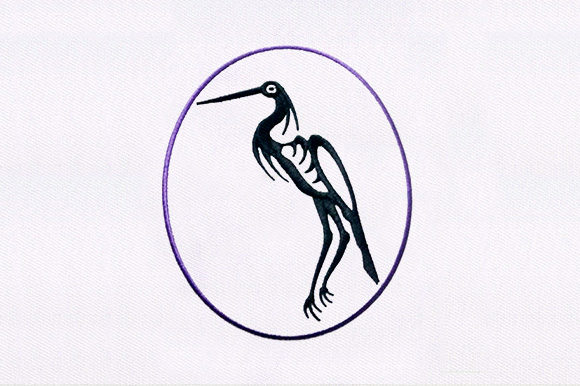
Heron: A Design Review for Small Business Merchandise
As a professional embroidery designer who has reviewed hundreds of machine embroidery designs for commercial use, I approach each new file with a critical eye. When I first opened the Heron design, I was immediately struck by its presence. This is not a delicate, ornamental bird design meant for decorative pillows or wall art. Heron carries itself with a quiet confidence that feels both elegant and grounded. It has the kind of visual weight that works exceptionally well for small business merchandise, embroidered patches, and branded apparel. Let me walk you through what I see in this design, where it shines, and where you need to be careful before you stitch it onto your next project.
First Impression: Elegant, Modern, and Business-Ready
Heron reads as a premium design. It does not try to be cute or overly decorative. Instead, it offers a clean, recognizable silhouette that feels natural and unhurried. For a small business owner looking to build a consistent brand identity, this is a strong asset. The heron is a bird associated with patience, precision, and calm focus — qualities that align well with handmade brands, creative studios, florists, bakeries, and boutique shops. The design feels modern without being trendy. It has a classic quality that will not feel dated after a season or two. That matters when you are ordering custom apparel or embroidered patches in bulk. You want a design that still represents your brand well a year from now.
Visual Personality and Brand Identity
When I review a design for business use, I ask myself: does this design help the customer trust the brand? With Heron, the answer is yes. The design conveys professionalism and attention to detail. It suggests that the business behind it values quality and craftsmanship. Heron works well for businesses that want to appear:
- Premium — The clean lines and natural subject matter feel upscale without being pretentious.
- Handmade — The design has an organic quality that complements handmade products and artisan goods.
- Approachable — A heron is familiar but not overused, making it distinctive without being obscure.
For a small café, a creative studio, or a pet brand, this design can become a signature mark. It is versatile enough to appear on a cap, a tote bag, an apron, or a product label without losing its impact.
Real Business Applications: Where Heron Works Best
I have tested similar designs across various merchandise formats, and I can see Heron performing well in several specific applications.
Embroidered Patches
Heron is an excellent candidate for embroidered patches. The design has enough structure to hold its shape when stitched onto a patch backing. Whether you are producing iron-on patches for customer merchandise or sew-on patches for staff uniforms, this design will translate well. The key is to test the patch size. At a larger scale, the heron will read clearly. At a very small patch size, you may lose some detail.
Chest Logo Accents
For a chest logo on a work shirt or apron, Heron sits well. It is not too wide or too tall, making it suitable for the left chest area. This is a common placement for small business staff uniforms, and Heron delivers a professional look that does not scream for attention.
Cap Embroidery
Cap fronts are curved and limited in space. Heron can work here, but you need to test the stitch density. A design with too many stitches can become stiff on a cap crown. I recommend using a smaller version of the design and confirming that the thread colors contrast well with the cap fabric.
Tote Bag Design
Tote bags are a favorite for small business merch, and Heron looks natural on a canvas or cotton tote. The design feels grounded and organic, which suits the casual, everyday nature of a tote bag. It also works well as a single-color design for a minimal, modern look.
Apron Embroidery
For bakeries, florists, and coffee shops, aprons are a practical canvas. Heron adds a touch of elegance to a work apron without being fussy. It can be placed on the chest pocket or centered on the bib.
Boutique Merchandise
If you sell handmade products, Heron can be used on product labels, packaging accents, or small hang tags. It reinforces the idea that your product is crafted with care. The design is also an excellent candidate for printable mockups, allowing you to show clients exactly how the finished product will look.
Careful Placement: Where to Use Caution
Not every design works well in every location. Here are some areas where I recommend testing Heron carefully before committing to production.
Small Patch Sizes
If you plan to use Heron as a small patch for caps or collars, test it first. The design may become distorted if it is too small. I recommend stitching a sample at your target size to see if the details remain clear.
Curved Surfaces
Cap fronts and curved bag handles can be tricky. Heron has a vertical orientation that may need to be adjusted for a curved surface. Use a smaller hoop and proper stabilizer to prevent puckering.
High Stitch Density
If the design has a high stitch count, it may become stiff on lightweight fabrics. This is especially important for items like aprons or tote bags that need to remain flexible. Test the design on your actual fabric before ordering in bulk.
Detailed Outlines
If Heron includes fine outlines, they may not stitch cleanly at very small sizes. I recommend using a high-quality machine embroidery design file and a sharp needle to ensure the outlines stay crisp.
Dark Uniforms
If you are stitching Heron on dark fabric, choose thread colors that provide strong contrast. Light gray or white thread can work well, but test a sample to confirm that the design reads clearly from a distance.
Frequent Washing
For items that will be washed often, like aprons or staff shirts, use a high-quality stabilizer and trim any loose threads carefully. The design should hold up well, but proper finishing is essential.
Practical Embroidery Designer Notes
Before you take Heron into production, here are some practical steps I recommend. These are the same steps I use when testing any new digital embroidery file for a client.
- Test in Black and White First. Print a paper template of the design at your target size and place it on the garment. This helps you visualize the placement and scale before you stitch.
- Check Thread Color Contrast. Heron will look best when the thread colors stand out against the fabric. If you are using a dark fabric, choose a light thread. If you are using a light fabric, a darker thread can create a striking look.
- Inspect the Spacing. Look at the design closely. Are there any areas where stitches are too close together? This can cause the fabric to pucker. I recommend running a test stitch on scrap fabric first.
- Confirm Hoop Size. Before you begin, confirm that the design fits within your hoop. Measure the design dimensions and compare them to your hoop size. If the design is too large, you may need to resize it.
- Test on Real Fabric. Always test the design on the actual fabric you plan to use. Different fabrics react differently to embroidery. Canvas, denim, cotton, and polyester blends all behave differently. Fabric texture matters.
- Use Proper Stabilizer. For patches, use a tear-away stabilizer. For garments, use a cut-away stabilizer for better durability. The stabilizer you choose can make or break the finished product.
- Create a Mockup for Client Approval. If you are producing this design for a client, create a printable mockup showing the design on the garment. This helps the client visualize the final product and reduces the chance of costly revisions.
- Compare Beside Other Design Assets. If your brand already has logos or other design assets, place Heron beside them to ensure visual consistency. The design should complement your existing branding, not compete with it.
- Confirm Commercial Licensing. Before you use Heron for any business purpose, confirm that you have the proper commercial license. This is especially important if you plan to sell the finished products. The design is a machine embroidery design available in many common embroidery file formats, and the license terms may vary by seller.
How Heron Affects Brand Identity and Customer Trust
A well-chosen machine embroidery design can elevate a small business. Heron, with its calm and composed presence, communicates that the business behind it is thoughtful and deliberate. Customers notice these details. When they see a beautifully embroidered patch on a tote bag or a cap, they associate that quality with the brand itself. Heron can help your business appear:
- Professional — A clean, well-stitched design signals that you take your business seriously.
- Trustworthy — Consistent branding builds trust over time.
- Distinctive — Heron is not a generic logo. It gives your brand a unique visual signature.
For Etsy sellers and handmade brands, this kind of design can be a valuable asset. It can be used across multiple product lines, from embroidered patches to custom apparel, creating a cohesive look that customers recognize. The design also adds perceived product value, allowing you to price your merchandise higher while maintaining a handmade presentation.
File Format Flexibility and Production Readiness
Heron is available in a wide range of embroidery file formats, including 10O, ART, CND, DSB, DST, DSZ, EXP, HUS, JEF, PCS, PEC, PES, TAP, VIP, VP3, and XXX. This level of compatibility means you can load the design into virtually any commercial embroidery machine without needing to convert files. For small business owners and embroidery shops, this saves time and reduces the risk of errors. Before you stitch, however, I recommend checking the exact stitch count and thread color chart for your specific format. These details are not included in the general description, so you will need to confirm them with the seller or open the file in your embroidery software to review the design data.
Final Verdict: A Strong Choice for Business Merchandise
Heron is a well-designed machine embroidery file that offers real value for small business owners, embroidery shops, and merchandise creators. It is elegant, professional, and versatile enough to work on patches, caps, tote bags, aprons, and uniforms. The key to success with this design is testing. Test the size, the thread colors, the fabric, and the stabilizer before you commit to production. If you take the time to get those details right, Heron will serve your brand well for years to come. Whether you are a boutique owner, a café operator, a florist, or a handmade brand, Heron deserves a place in your design assets. It is a design that works as hard as you do.