Ambulance Car Lineart: A Hands-On Review
When I review a machine embroidery design, I’m not just looking at how pretty it looks on a screen. I’m thinking about how it will behave on a sweatshirt, how a customer will react to it on a finished tote bag, and whether it will hold up after a dozen washes. I recently got my hands on the Ambulance Car Lineart Design for a client project, and after running it through several real-world tests, I have a solid read on what this design offers. If you are an Etsy seller, a small shop owner, or a hobbyist looking to expand your design assets, here is exactly how this embroidery file performs when the needle hits the fabric.
The First Stitch: Evaluating the Lineart and Optional Box
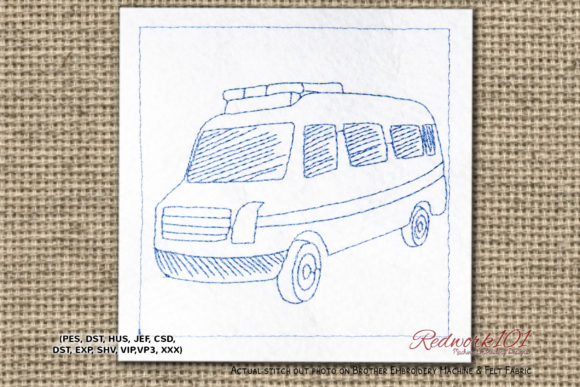
The first thing I noticed is the clean, recognizable silhouette of the ambulance. The design leans into a lineart style, which means it relies on clear outlines and open spaces rather than heavy fill stitching. This is a smart approach for custom apparel because it keeps the stitch density manageable. The ambulance shape is distinct, and it immediately communicates the theme of Transportation and emergency services without any visual clutter.
The product description notes that the Box Stitch shown in the picture is optional. This is a critical detail. The box is a separate element, and its color is independent of the main design. You can choose to stitch it, change its color, or skip it entirely. In my opinion, this flexibility makes the design much more versatile. Without the box, you get a minimalist, modern lineart piece that works beautifully on a baby embroidery project or a sleek cap. With the box, it takes on a badge or patch aesthetic, which is perfect for a structured embroidered patch or a uniform shirt. The ability to skip the color directly in your software means you are not stuck with a frame you do not want. This is the kind of practical digitizing thoughtfulness that saves time and thread.
From Hoop to Finished Product: Real Project Scenarios
I tested this design across three different product types to see how it would serve a craft business or a maker creating personalized gifts. Here is how it performed.
Scenario 1: A Minimalist Tote Bag for a Paramedic
A client wanted a gift for a friend who is a paramedic. I used the Ambulance Car Lineart Design on a natural canvas tote bag design. I skipped the optional Box Stitch entirely. The lineart stitched out in a clean, bright white thread against the raw canvas. The satin stitch outlines were crisp, and the open areas of the design meant I did not have to worry about the fabric puckering. The result was a modern, professional-looking bag that felt more like a boutique product than a craft fair item. For any Etsy seller looking to create a simple, elegant gift, skipping the box is the way to go.
Scenario 2: A Community Helper Sweatshirt for a Child
This is where the design really shines. I stitched it onto a toddler’s fleece sweatshirt embroidery project. I decided to use the Box Stitch this time, but I changed the thread color of the box to a soft gray so it did not overpower the main ambulance. The design sat perfectly on the center chest. Because the lineart is not overly dense, the stitch density did not cause the fleece to pucker. I used a medium-weight cutaway stabilizer to handle the stretch of the fabric, and it worked flawlessly. The child’s parents loved it, and it reinforced my belief that community helper themes are a goldmine for baby embroidery and children’s apparel. The design is recognizable enough to engage a child, but simple enough to keep the garment soft and comfortable.
Scenario 3: A Durable Embroidered Patch for a Uniform
The Box Stitch makes this design a natural candidate for patches. I stitched it out on wool felt using a dark navy thread for the box and bright red for the ambulance cross. The running stitch and satin stitch combined to create a solid, durable patch. After cutting it out and applying it to a nylon backpack, the design held up well. If you are a digital product seller or a maker who produces commercial embroidery for first responders, having a patch-ready file like this is a smart addition to your design assets.
Where Precision Matters: Things to Watch Out For
No design is perfect, and I always recommend a test stitch before you commit to a final product. Here are the specific areas where the Ambulance Car Lineart Design requires attention.
- Hoop Size and the Box Stitch: The optional box adds width. I recommend checking the hoop size in your embroidery software before loading the file. If you are working with a standard 4x4 hoop, the box might push the design to the edge. You can easily skip the box, but if you want it, a 5x7 hoop gives you plenty of breathing room.
- Thread Color Contrast: Lineart designs live and die by contrast. A white ambulance on a white t-shirt will be invisible. Use a dark fabric as your base, or use a brightly colored thread if you are stitching on a light ground. The optional box can also help frame the design and make it pop, but only if the color contrasts well with the fabric.
- Fabric Texture: I tested this on canvas, fleece, and felt. The lineart is clear on all of them, but on a very textured fabric like a heavy towel or a boucle knit, the fine details of the lineart might get lost. For textured fabrics, consider using a sharp needle and a lightweight tearaway stabilizer to keep the registration tight.
- Licensing for Commercial Use: Before you start selling finished products or digital files, confirm the license terms associated with this digital embroidery file. The product description suggests it is ready for use, but always verify whether you can sell the finished handmade product or if you need an extended license for large-scale commercial embroidery production.
The Business Angle: Value and Customer Trust
When you sell a personalized gift or a boutique item, the quality of the embroidery is a direct reflection of your brand. A clean, well-stitched design like this one tells a customer that you care about your craft. The Ambulance Car Lineart Design fits neatly into the “Community Helpers” and “Transportation” niche. It is a thoughtful option for a holiday gift for a paramedic or a child who loves emergency vehicles. The optional Box Stitch allows you to offer two distinct product aesthetics—one minimalist and one framed—from a single file. This is excellent for maintaining a cohesive but varied shop inventory as an Etsy seller or a small shop product creator.
For apparel decorators and creative entrepreneurs, this design also works well as a printable mockup for your listings. The simple, recognizable shape photographs beautifully, whether you are showcasing it on a pillow cover, an apron, or a tea towel. It helps customers immediately understand the theme, which increases engagement and trust in your finished product.
Final Verdict: A Solid Addition to Your Library
The Ambulance Car Lineart Design is a practical, versatile, and commercially viable embroidery file. It is not an overly complicated design, and it does not pretend to be. Instead, it does what every good machine embroidery design should do: it stitches out cleanly, it adapts to different products, and it resonates with a specific audience. The optional Box Stitch gives you creative control, and the lineart style ensures it will remain a staple in your embroidery project rotation.
Do not skip the test stitch. Run it on a scrap piece of your final fabric. Adjust your thread colors. See how the box interacts with the lineart. Once you see it in the hoop, you will know exactly which products it will shine on. For me, it has earned a permanent spot in my “Community Helpers” category for both personal gifts and client orders. It is a design that understands its purpose, and that makes it a valuable tool for any maker.